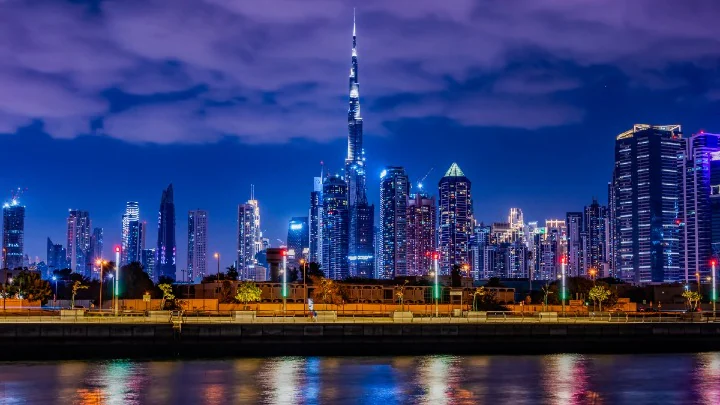
Dubai is a city defined by the impossible. From the breathtaking heights of the Burj Khalifa to the sprawling luxury fronds of the Palm Jumeirah, the emirate’s real estate and architectural achievements are a global benchmark for modern luxury. For residents and visitors alike, the “Dubai lifestyle” promises an experience of seamless comfort: perfectly chilled interiors despite the searing desert heat, instantly responsive smart homes, and uninterrupted 5-star hospitality.
However, beneath the imported marble floors, behind the gold-leaf accents, and running through the very core of these towering super-structures lies a highly complex, invisible network. The true foundation of Dubai’s luxurious standard of living is its electrical infrastructure. As architectural designs become more ambitious and homes become deeply integrated with artificial intelligence, the demand placed on the city’s hidden wiring is monumental.
1. Powering Ultra-Luxury Real Estate and Smart Mansions
The modern Dubai mansion—found in exclusive enclaves like Emirates Hills, District One, or Dubai Hills Estate—is no longer just a spacious home; it is a high-tech ecosystem. These ultra-luxury properties feature centralized climate control, automated ambient lighting, private home cinemas, high-speed EV charging stations, and comprehensive smart security systems that can be controlled from a smartphone anywhere in the world.
The electrical load required to run a property of this magnitude is staggering, often rivaling that of a small commercial building. Standard residential wiring simply cannot handle the continuous, heavy current required to power these amenities without suffering from voltage drops or dangerous overheating.
To guarantee that a multi-million-dirham smart home operates flawlessly 24/7, high-end developers partner with premium power cable suppliers in uae to lay a robust, heavy-duty electrical foundation. By utilizing high-capacity cables insulated with advanced materials like Cross-Linked Polyethylene (XLPE), engineers ensure the localized power grid remains incredibly stable and safe, regardless of the immense electrical demands placed upon it by the homeowner.
2. Bending to the Blueprint: Cabling for Kinetic and Complex Architecture
Dubai’s skyline is famous for rejecting the standard “box” shape. Buildings like the twisting Cayan Tower, the asymmetrical Museum of the Future, and luxury high-rises with kinetic (moving) facades present a massive logistical nightmare for electrical contractors.
Running reliable power through these avant-garde structures means navigating tight, unconventional conduits, extremely sharp corners, and areas subject to constant mechanical vibration. In a supertall skyscraper, massive water pumps, industrial HVAC chillers, and high-speed elevator motors create continuous tremors. Furthermore, towers of this height are intentionally designed to sway slightly in high winds.
Rigid, standard cables are highly vulnerable in these environments. Subjected to constant vibration and movement, the stiff copper conductors suffer from “work-hardening,” eventually becoming brittle and snapping. To overcome this architectural challenge, contractors turn to specialized Rubber Cable Suppliers in UAE. These suppliers provide highly specialized, fine-stranded elastomeric cables. Built for extreme flexibility, these rubber cables can bend around the most complex architectural curves and absorb constant mechanical shocks and building sway without degrading, ensuring the lights stay on at the very top of the skyline.
3. Uninterrupted VIP Hospitality
Dubai’s hospitality sector is fiercely competitive. When guests check into iconic resorts like the Burj Al Arab or Atlantis The Royal, any lapse in comfort—a flickering light, a disconnected Wi-Fi router, or a momentary loss of air conditioning—can instantly tarnish a 5-star reputation.
To achieve absolute zero-downtime, these mega-resorts employ highly complex, redundant cabling architectures. Utilizing top-tier medium and low voltage cables, the resorts are wired with multiple power feeds. If one sector of the local grid experiences a fault, automated transfer switches instantly pull power from a secondary cable network or a synchronized generator array. The quality and conductivity of the cables ensuring this instantaneous switch are what make the “always-on” luxury experience possible.
4. Safety in the Clouds: Fire Survival in Supertall Structures
Living in the clouds comes with unique safety responsibilities. In a densely populated supertall skyscraper, a fire emergency is a highly complex scenario. Evacuating a building that is 80 or 100 stories tall takes significant time, and panic or smoke inhalation are far greater threats than the flames themselves.
Standard PVC cables release thick, toxic black smoke when burned, which can rapidly blind residents and make stairwells impassable. To protect the lives of residents, Dubai’s civil defense codes are among the strictest in the world. Luxury high-rises strictly utilize Low Smoke Zero Halogen (LSZH) cables that produce breathable air and clear visibility during a fire.
Furthermore, critical systems like firefighter elevators, emergency corridor lighting, and smoke extraction fans are wired with specialized fire-survival cables. Wrapped in fire-resistant Mica tape, these cables are engineered to continue delivering power even while actively sitting in a 900°C fire for over two hours, giving everyone the time they need to evacuate safely.
5. Wiring the Sustainable Luxury Future
The definition of luxury in Dubai is rapidly evolving to include sustainability. High-end property buyers now expect their homes to feature rooftop solar integrations and intelligent energy-management systems that lower their carbon footprint without sacrificing comfort.
Connecting solar arrays to a luxury villa requires specialized photovoltaic (PV) cables that can withstand the blistering UV radiation of the desert sun on a rooftop. As Dubai transitions toward a greener, smarter future, the underground and internal cables must be capable of handling bi-directional power flows—drawing power from the grid when needed, and feeding clean solar power back into it.
Conclusion: The True Foundation of the Skyline
While the world marvels at the sleek glass facades, the infinity pools, and the breathtaking interior design of Dubai’s real estate, the true unsung hero is the electrical engineer. By investing in highly resilient power cables, incredibly flexible rubber wiring for complex architecture, and uncompromised fire safety systems, developers ensure that the city’s architectural dreams become a livable reality. The luxury lifestyle of Dubai is not just built on concrete and steel; it is empowered by the invisible, flawless performance of its electrical infrastructure.
Your Dubai Luxury Infrastructure Questions Answered (FAQs)
Why do modern luxury villas need different cables than older homes? Modern luxury villas are integrated with heavy electrical loads that older homes never had, such as smart home automation servers, multiple EV chargers, centralized district cooling, and high-end home theaters. These require high-capacity, heavy-duty power cables to prevent grid overload and ensure stable performance.
How does building sway in skyscrapers affect the electrical wiring? Supertall skyscrapers are designed to sway slightly to absorb wind pressure. If the internal electrical cables are entirely rigid, this constant micro-movement can cause the copper to snap over time. Engineers use flexible, highly stranded cables (often with rubber insulation) in strategic areas to absorb this movement safely.
What is an LSZH cable and why is it mandatory in Dubai high-rises? LSZH stands for Low Smoke Zero Halogen. Standard plastic cables release toxic, blinding black smoke when they catch fire. LSZH cables are engineered with special compounds that produce almost no smoke and zero toxic gases when burned, ensuring that residents can safely see and breathe while evacuating a skyscraper.
Can regular wires be used for solar panels on a Dubai mansion? No. Solar panels sit on the roof and are exposed to extreme heat and intense Ultraviolet (UV) radiation year-round. Standard cables will quickly become brittle and crack under the sun. They require specialized PV (photovoltaic) cables designed with UV-resistant “carbon black” additives to survive the desert climate.
Why are rubber cables used in hotel elevator shafts? Elevator shafts are environments of constant motion, high mechanical stress, and vibration. Flexible rubber cables are highly resistant to mechanical wear and tear, ensuring that the power and data traveling to a moving elevator car remain uninterrupted and the cables do not fray from constant bending.